Why Won't My Bike Gears Change Properly — The Two Minute Checks First
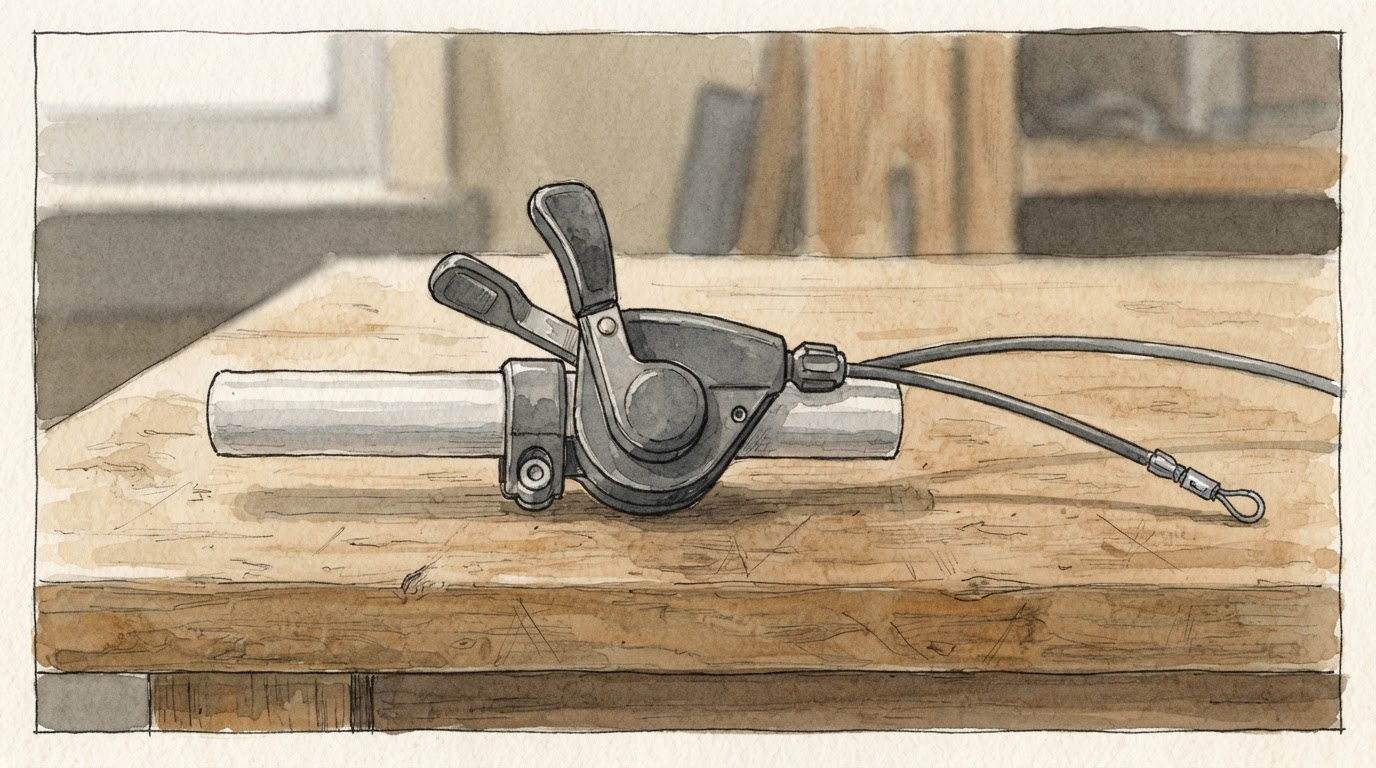
A bent derailleur hanger — invisible to the eye and caused by any minor knock — makes every other adjustment useless, and checking it takes 30 seconds.
When gears start misbehaving, most riders instinctively reach for the barrel adjuster. It’s the obvious control, the thing that clicks, and it feels like it should fix the problem. But many gear-indexing faults aren’t adjustment problems at all — they’re physical issues that no amount of cable tension tweaking will solve.
Before touching the adjuster, you need to rule out the two primary causes of persistent gear-shifting issues: a bent derailleur hanger and worn or contaminated cables. Once those are checked, the barrel adjuster becomes genuinely useful. Until then, you’re just compensating in the wrong plane.
Start with the derailleur hanger
The rear derailleur hanger is a sacrificial piece of metal bolted to the frame, designed to bend before the frame does. That safety feature becomes a liability when the hanger bends just enough to ruin your gear indexing without looking obviously damaged.
The hanger holds the rear derailleur at a specific angle relative to the cassette. The derailleur’s jockey wheels need to sit in the same plane as the cogs for the chain to move cleanly between gears. When the hanger bends — even by a small amount — it shifts that plane. The derailleur moves diagonally instead of straight across, and no amount of barrel adjustment will correct it.
This issue frequently affects bikes that have been transported, racked on trains, knocked over in storage, or dropped at the kerb. It catches riders off guard because the bend is often subtle enough that the derailleur doesn’t look obviously twisted.
Stand behind the bike and look straight at the rear cassette. The top jockey wheel should sit directly over the largest cog, and the lower jockey wheel directly under it, in line with the smallest cog. If they’re not centred — if the whole derailleur assembly looks offset — the hanger is likely bent. You can also hold a straight edge against the side of the cassette to check if the jockey wheel runs parallel.
A bent hanger requires physical correction, not adjustment. Professional shops use hanger alignment tools like the Park Tool DAG-2.2, which are also available for home use. If the hanger is cracked rather than bent, it needs replacing. Most modern frames use replaceable hangers, but you need the correct model for your frame.
Inspect cables and housing
If the hanger is straight, your next check is the cables and housing. These components transfer your input at the shifter to the derailleur. When they’re compromised, the derailleur can’t move far enough or fast enough for clean shifts.
Check the cable itself: run your fingers along the exposed section and feel for fraying, rust, or flat spots. Any roughness means replacement is needed. Then examine the housing: look for kinks, sharp bends, or crushed sections that create friction.
Also check the derailleur pivots. The derailleur body should pivot freely when pushed by hand. If it feels sticky or gritty, water and road grime have contaminated the pivot bearings. Wipe the pivots clean and apply a small drop of chain lube — just enough to restore movement without attracting dirt.
Cable contamination is often cumulative. The cable might look fine, but inside the housing, grit builds up over months. That’s why a bike with original cables can suddenly develop sluggish shifting — the contamination has crossed a threshold.
If cables are fraying or housing is kinked, replacing bike cables and housing is straightforward for a home mechanic. It’s a worthwhile investment if your bike is more than a couple of years old with original cables still in place.
Now you know what to look for — get the Free Bike Care Checklist to make sure you run through every check before reaching for any tools.
When to use the barrel adjuster
With the hanger straight and cables clean, the barrel adjuster serves its proper purpose: fine-tuning cable tension as cables stretch over time and making micro-adjustments for minor wear.
The principle is straightforward: turning the barrel adjuster one way increases cable tension, pulling the derailleur toward smaller cogs. Turning it the other way loosens tension, allowing movement toward larger cogs. The adjuster allows precise tuning once the physical alignment is correct.
The mistake is using the barrel adjuster to compensate for a bent hanger or sticky cables. If the derailleur isn’t in the right starting position — set by the hanger — every click shifts it along the wrong trajectory. Riders who haven’t checked the hanger first often end up in a frustrating loop of adjustments that never solve the core problem.
A quick diagnostic: if turning the barrel adjuster several clicks in either direction doesn’t move the chain between cogs, the issue isn’t adjustment — something is physically blocking the derailleur’s movement. Recheck the hanger and cables before further adjustment.
Tyre pressure’s limited role
Some sources suggest low tyre pressure causes gear skipping. While extremely low pressure that visibly deforms the wheel under load might affect drivetrain performance, this is rarely the primary issue. Critically low pressure is usually obvious from sluggish riding and vague cornering.
If your gears are misbehaving but your tyres feel normal, focus on the mechanical checks first. However, if you’ve been running a slow puncture or neglecting inflation, it’s worth checking your bike tyre pressure while you’re troubleshooting. A good floor pump with a gauge provides consistent results for regular maintenance.
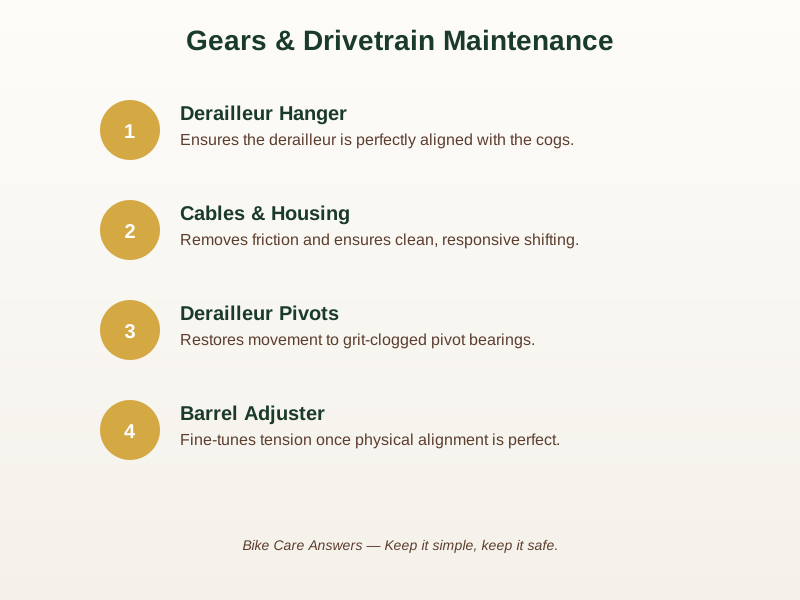
Troubleshooting sequence
| Step | Check | Purpose |
|---|---|---|
| 1 | Derailleur Hanger | Ensures the derailleur is perfectly aligned with the cogs |
| 2 | Cables & Housing | Removes friction for responsive shifting |
| 3 | Derailleur Pivots | Restores movement to contaminated bearings |
| 4 | Barrel Adjuster | Fine-tunes tension after physical alignment is correct |
Common questions answered
Can I straighten a bent derailleur hanger myself?
Yes, with the proper tool. A hanger alignment gauge slots onto the axle and lets you straighten the hanger against a reference edge. If the hanger is cracked rather than bent, replacement is necessary — most frames use replaceable hangers specific to the model.
Why does my chain keep falling off the front chainring?
This typically involves front derailleur limit screws or chain wear, not a bent hanger. Check that the limit screws on the front derailleur prevent the chain from dropping outside the chainrings. A worn chain may not sit properly on the teeth and can skip under load.
How frequently should gear cables be replaced?
For regularly ridden commuter bikes, consider replacement every one to two years, or sooner if you notice rust, fraying, or stiff shifting. Older bikes that have never had cable replacement will likely benefit from new cables.
Add a visual hanger check to your pre-ride routine: sight down the cassette from behind the bike — the hanger should be parallel to the wheel. This five-second check catches alignment issues before they affect shifting.
If your problem persists after these checks, the issue may involve component wear rather than alignment. These resources provide deeper investigation:
- Bike Gears Skipping Under Load — Cassette Wear, Chain Stretch Or Cable Tension
- How To Adjust Bike Gear Cables At Home — Barrel Adjuster And Cable Tension
For quick answers to specific questions:
Sources & Further Reading
Note: This is general guidance only. For specific mechanical concerns, verify details with a qualified local bike shop or the manufacturer’s official service documentation.