How To Remove Rust From A Bike Chain — And When To Replace It
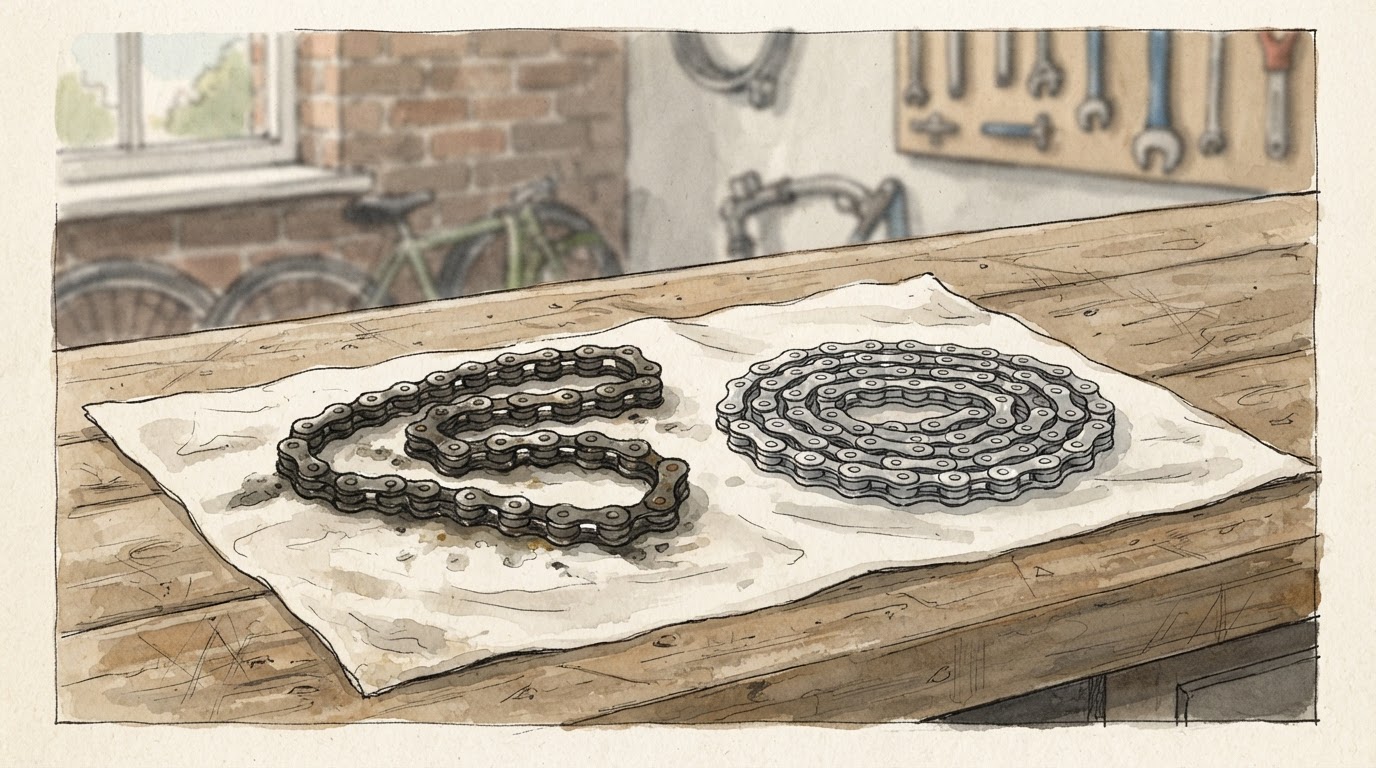
A chain that a wear checker reads as worn out is beyond saving regardless of how much rust you remove—that internal wear means replacement is the only sensible option. Follow the checker’s instructions to tell cosmetic rust from real wear.
You hop on your bike and hear a gritty squeak instead of a smooth whir. A glance down reveals orange speckles along the chain. The immediate thought is to replace it, but surface rust isn’t always terminal. The real question is whether the rust is just on the surface or has worked its way inside to seize the links. One is a cheap, quick fix; the other means a new chain. Here’s how to tell the difference and clean it safely without harming your drivetrain.
As an Amazon Associate we earn from qualifying purchases. Some links on this page are affiliate links, which means we may earn a small commission if you make a purchase.
In the UK, chains frequently develop rust due to wet winters, road salt, and damp storage in sheds or bike stores. Before considering replacement, check if the rust is merely cosmetic—sitting on the outside plates—or if it has seized the links. The first needs a rag and some vinegar; the second needs a chain tool or a trip to the shop. This article walks you through the diagnosis and the fix.
Understanding Chain Rust and Its Impact
Rust is iron oxide, formed when metal, water, and oxygen react. Leave a chain damp and it will corrode. Road salt accelerates corrosion in the UK because salt is hygroscopic, meaning it draws moisture from the air and keeps metal surfaces wet long after the rain stops. A chain that looks dry might still be coated in a fine, corrosive salt solution from your last wet commute.
Storage conditions significantly influence rust formation. A bike kept in poorly ventilated storage may develop surface rust quickly due to British weather conditions.
Beyond appearance, a rusty chain affects performance. Rust creates an uneven surface, increasing friction. Riders may notice a grinding or chattering sensation through the pedals. Rust particles are abrasive and can accelerate wear on cassette teeth and chainrings over time. Dealing with surface rust early helps protect the rest of your drivetrain.
Assessing Chain Condition
This crucial decision is simpler than most guides suggest. Hold the chain in both hands and try to flex a single link side-to-side. A healthy chain bends freely at every joint. If a link resists, moves stiffly, or doesn’t spring back, the internal bushing is likely seized.
If any link is stiff, the chain should be replaced. Cleaning methods like vinegar or WD-40 only treat the surface; they can’t free a seized bushing. Forcing a stiff link risks snapping the chain under load. Do this flexibility test before applying any cleaner.
Vinegar Soak for Surface Rust
White vinegar contains acetic acid, which can dissolve iron oxide. Soak the chain in undiluted white vinegar in an old jar or tub for a limited time, swirling occasionally. After soaking, rinse it thoroughly under running water to remove all vinegar residue. Dry the chain completely with a rag, then apply chain lube immediately to protect the metal.
This works well for light to moderate surface rust on the outer plates. The orange coating lifts off without scrubbing. Vinegar won’t reach inside the link gaps—it only treats what it touches. If rust has crept between the plates or into the bushing, you’ll clean the surface but still have a stiff link underneath.
For a chain that passes the flex test but looks grotty, a vinegar soak followed by proper relubing is often sufficient.
Quick Maintenance Method
The ‘mickle’ method involves clamping a rag around the chain, pedalling forward so the chain runs through it, then applying a few drops of chain lube to the top run while still pedalling. Clamp the rag again and pedal backwards. The rag removes excess lube and loosens surface grime in one pass.
It’s effective for light surface rust and regular upkeep. Quick and cheap, it leaves some lubricant behind. For a chain that’s mostly clean with minor surface rust, it’s adequate for a quick tidy-up. It won’t shift heavy rust or fix stiff links. Treat it as regular maintenance between deeper cleans, not a solution for established corrosion.
Apply the lube to the top strand of chain while pedalling slowly by hand for more even distribution.
Using Solvents and Sprays
WD-40 can break down the bond between rust and metal. It works on surface rust and evaporates quickly. The downside is that evaporation leaves no protective barrier—you must rinse the chain and apply proper chain lube afterwards. WD-40 is a cleaner, not a lubricant.
GT85 functions similarly, leaving a slightly oily film. If you already have a can, it can work for a rusty chain, but wipe off the excess and relube after.
These solvents require follow-up. Spray on, leave for a few minutes, wipe off, then lube. Skipping the lube simply postpones further rust.
Preventing Rust Return
Cleaning a rusty chain once won’t help if you return it to the same damp conditions. Storage matters significantly.
A bike kept in dry storage will rust much more slowly than one left in damp conditions. If outdoor storage is your only option, a breathable bike cover can help—the Oxford Aquatex (paid link) offers lightweight protection, though better suited to occasional use than permanent outdoor exposure. Airflow is crucial, not just rain protection.
See Oxford Aquatex on Amazon → (paid link)
Regular cleaning and lubing completes prevention. For UK commuters in winter, clean and lube more frequently—especially after riding in wet, salty conditions. A chain wiped down and relubed after a wet ride will far outlast one left to dry with grit baked on.
Some surface rust is normal for most UK riders and not necessarily a sign of failure. The critical distinction is whether it’s external or internal. Check the flex, then decide.
Comparing Rust Removal Approaches
| Method | Best For | Cost | Time Required |
|---|---|---|---|
| Vinegar Soak | Surface rust on outer plates | Low | 15 minutes soak + rinse |
| Mickle Method | Light use / Budget maintenance | Low | 5 minutes |
| Solvents (WD-40) | Quick surface cleaning | Low | 10 minutes |
| Chain Replacement | Seized links / Heavy rust | Replacement cost | 10 minutes |
| Regular Wiping | General maintenance | Low | 2 minutes per ride |
Common Questions About Chain Rust
Can I use Coke or lemon juice to clean my chain?
Both are mildly acidic and may shift some surface grime, but they’re less effective than white vinegar and considerably messier. Cola can leave a sticky residue that attracts dirt. Lemon juice is better but still not as reliable as vinegar. If you have vinegar available, use that instead.
Will a rusty chain damage my gears?
A chain with stiff, seized links can accelerate wear on cassette teeth and chainrings—the uneven motion and extra friction cause premature wear. Surface rust on a flexible chain is less harmful but still worth addressing. Letting it sit for months invites wear that’s more expensive to fix than replacing the chain itself.
How often should I clean my chain?
For most UK riders, regular cleaning intervals are necessary. During winter, or if commuting in wet, salty conditions, more frequent cleaning is advisable. A quick wipe-down after particularly wet rides extends the time between full cleans.
The vinegar soak and other methods described here are recovery tools, not maintenance tools. The only reliable prevention is a post-ride wipe and re-lube. For ongoing chain care, see our guide on How To Clean A Bike Chain At Home .
Now you know what to look for—Get the Free Bike Care Checklist to keep on top of the jobs that matter most. A chain check is quick and a vinegar soak costs almost nothing, so there’s no reason to let a bit of surface rust cost you a new drivetrain.
Related Guides
For a complete overview, see our Why Does My Bike Chain Keep Falling Off — Derailleur Limits, Chain Length And Wear .
Sources & Further Reading
As an Amazon Associate we earn from qualifying purchases. The products linked above are ones we think are worth a look.
General guidance only, verify details with a qualified professional or official source.