How To Clean A Bike With Household Products — What Damages Brakes And Bearings
Most advice for cleaning your bike assumes you have a bottle of specialist spray and a pressure washer at the ready. In reality, you’ve probably got washing-up liquid, the kitchen tap, and a nagging worry that using the wrong stuff could ruin something important. That worry is spot on.
The “anything goes” approach skips over the two most expensive parts of your bike: the frame and the bearings. A product that’s wrong for your paint or materials doesn’t just leave a dull streak; it can corrode aluminium, degrade the rubber seals that keep your bearings quiet, and create a repair bill out of thin air. The good part is that the safest options are also the cheapest, and the dangerous ones are usually things you wouldn’t touch if you knew what they did to metal and rubber.
Here’s what you can safely grab from under the sink, what you must leave on the shelf, and why the line between them matters—especially around your brakes and bearings.
Starting Safely: Household Products That Work
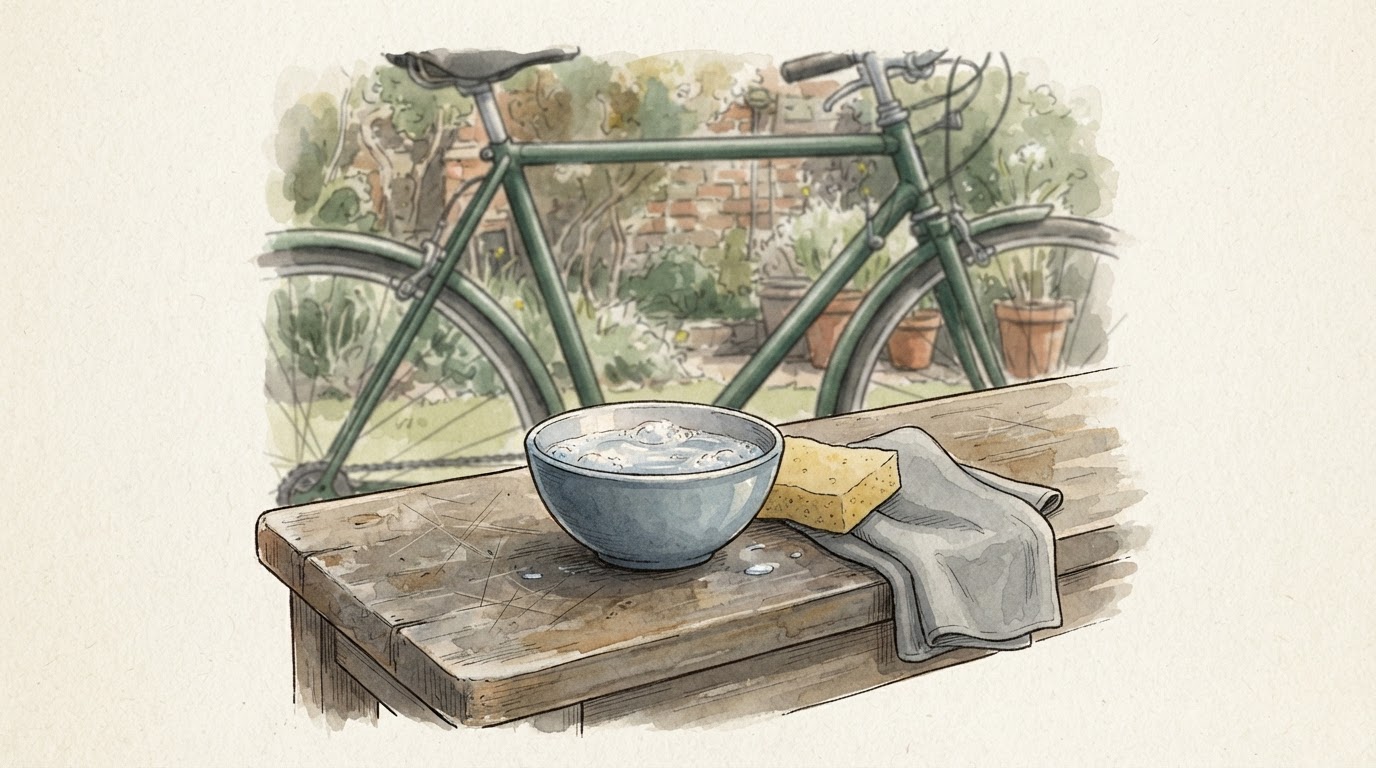
For general grime, you don’t need anything special. A few drops of washing-up liquid in a bowl of warm water, a sponge or cloth to agitate, and a gentle rinse handles most weekend muck. It cuts through light grease effectively without harming finishes.
A microfibre cloth makes a difference on light-coloured frames—it doesn’t leave the grey streaks that standard sponges can. For stubborn dirt on steel frames, some DIY guides suggest white vinegar with baking soda to lift surface rust, but vinegar’s acidity can damage aluminium. Stick with washing-up liquid and a soft brush for aluminium frames.
Avoid “all-in-one” cleaning wipes from the household aisle. They often contain solvents not meant for bike paint, and the abrasive action can dull lacquered surfaces over time.
A quick reference for common household items:
Safe:
- Washing-up liquid and warm water — frame, forks, wheels, drivetrain
- Warm water and a soft brush — general grime
- Microfibre cloths — anywhere you’d use a sponge
Skip:
- All-purpose cleaning wipes — unknown solvents, scratch risk
- Cream cleaners with grit — can mark painted surfaces
- Anything labelled “powerful”, “industrial”, or “degreaser” — usually too strong for frame paint
Products to Avoid: The Damage They Cause
This is the critical part, because the damage here isn’t cosmetic; it’s often irreversible and hits function, not just looks.
Bleach-based bathroom cleaners can damage aluminium finishes. The chemicals may etch the protective layer, leading to corrosion. For best results, use pH-neutral cleaners recommended for metal surfaces.
Oven cleaners seem logical for stubborn grime but contain strong alkalis that can strip paint and damage rubber compounds. The rubber seals inside your headset, bottom bracket, or hub bearings can become brittle over time, leading to premature failure.
Car wheel cleaners often contain acids that are effective on brake dust but harmful to aluminium frames, brake pads, and rubber seals. Acid can linger in crevices and continue damaging surfaces if not thoroughly rinsed.
WD-40 has its place for removing light surface rust from non-braking metal parts, but keep it away from brakes. It can contaminate brake pads, causing squealing and reduced stopping power.
The pattern is clear: products designed for heavy-duty cleaning often contain chemicals too aggressive for bike components. Acids and strong alkalis react with metals and organic compounds—exactly what makes them effective on ovens and car wheels, but dangerous for your bike.
Special Care Around Brakes and Bearings
Cleaning the frame is one thing. Cleaning near the brakes and bearings raises the stakes significantly.
Brake rotors and pads require careful handling. Any oil—chain lube, WD-40, or skin oils—can transfer to the pad compound and reduce friction. This leads to squealing brakes, longer stopping distances, and unpredictable performance. Once pads are contaminated, washing rarely fixes them; replacement is usually needed.
Bearings—hubs, bottom brackets, headsets—are sealed to protect against grit and water. The biggest threat comes from pressure washers or strong hose jets that force water past the seals. Water carrying dirt into the bearing races causes grinding noises that may appear months later. A bucket of water and a cloth, applied gently around the frame and wheels, is much safer than high-pressure methods.
The key is avoiding direct jets on bearing seals and keeping all cleaning products away from braking surfaces. More cleaner doesn’t mean a cleaner bike, and more pressure can drive contaminants into places they shouldn’t go.
A Safe Cleaning Sequence
Here’s an effective method using simple tools:
- Brush off loose grime first. A dry brush over the frame, fork, and wheels clears mud and grit before you add water, preventing you from rubbing dirt into the paint.
- Wash the frame and wheels with soapy water. Use washing-up liquid and warm water with a microfibre cloth or soft sponge. Work top to bottom—handlebars, frame, forks, then wheels. Rinse your cloth between sections to avoid spreading grit.
- Clean the drivetrain separately. The chain, cassette, and chainrings hold the most oil and grime. Use a dedicated bike degreaser for best results. Apply, scrub with a brush, and rinse thoroughly. Use separate cleaning tools for the drivetrain and frame.
Check Muc-Off Bio Degreaser price → (paid link)
- Rinse with low-pressure water. A bucket of water poured over the frame, or a hose on a gentle setting, is sufficient. Avoid directing water jets at bearing seals.
- Dry thoroughly. Use a dry microfibre cloth or towel, paying attention to the chain, cassette, and areas where water pools.
This approach keeps your bike clean without risking damage to sensitive components.
For more detail on chain care, see our guide on how to lube a bike chain .
Common Questions Answered
Can I use vinegar on my aluminium bike?
No. Vinegar is acidic and can corrode aluminium finishes. The vinegar-and-baking-soda approach is only suitable for surface rust on steel frames. For aluminium, stick with washing-up liquid and water.
Is WD-40 safe to use on my bike?
Only for removing light surface rust from non-braking metal parts like bolts or seatposts. It’s not a frame cleaner and should never be used near brakes. If used on the frame, wipe it off before it dries and follow with soapy water.
Can I use a pressure washer on my bike?
Use extreme caution. Keep the jet moving and avoid aiming directly at bearing seals. Pressure washers can force water past seals, contaminating bearings. A bucket and cloth is safer for regular cleaning.
Safe Substitutions for Common Products
| Dangerous Product | Safe Alternative |
|---|---|
| Bleach cleaners | Washing-up liquid & water |
| Oven cleaners | Soft brush & soapy water |
| Car wheel cleaners | Microfibre cloth & mild soap |
| WD-40 (near brakes) | Isopropyl alcohol for brake cleaning |
For complete cleaning techniques, see our How To Clean A Bike Chain At Home — Household Products, Degreaser Or Neither .
Sources & Further Reading
As an Amazon Associate we earn from qualifying purchases. The products linked above are ones we think are worth a look.
Note: General guidance only, verify details with a qualified professional or official source.